A RiseNGrind possibility
A training brand built around showing up
A training identity that belongs on the shirt and at the next session.
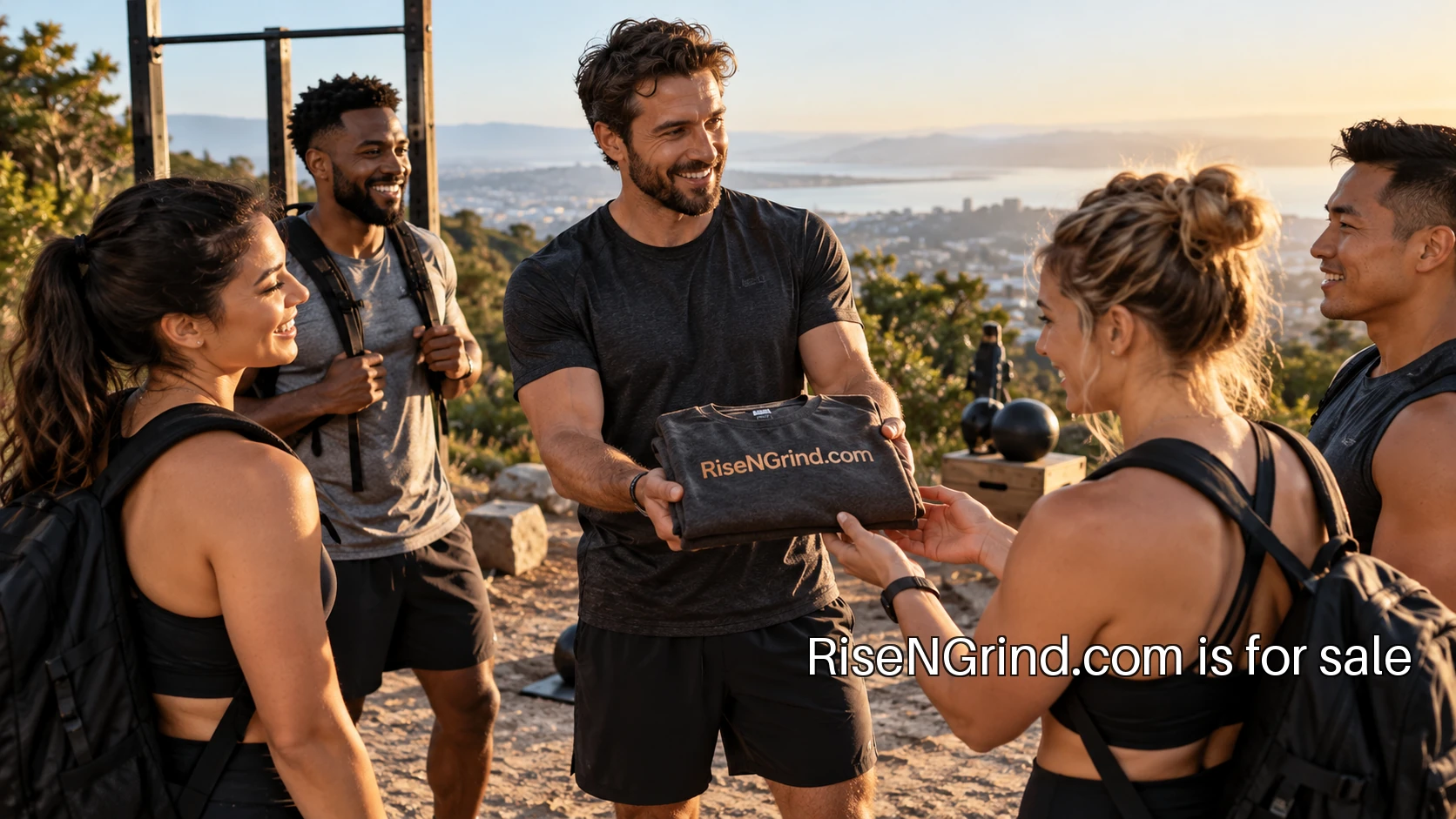
RiseNGrind.com could give a training brand a shared identity across the clothing people wear and the sessions they attend. The useful starting point is a real group with a routine. This illustrative concept begins with a small apparel capsule, a coach partnership and a repeat local session, with each part serving the same people.
Choose a group you can meet in person
Start with a training group whose needs can be observed directly. It could be a coach's early session, a small strength gym or a group that meets before work. Ask what they wear now, what wears out first and what they leave in a drawer. A founder needs answers about movement, fit, washing and everyday use before choosing colors for a large range.
Keep the first customer description concrete. A shirt for a group training indoors several mornings each week has a different job from a layer worn while arriving and leaving in cooler weather. Select one of those jobs. The tighter brief makes product samples easier to compare and gives the first wear testers a clear question to answer.
The Australian Government's guide to market research outlines how to investigate customers and competing offers. For this concept, the most useful early research happens with the people who might wear the first batch. Ask them to bring the item they reach for most often and explain why it earns that place.
Build a capsule with a reason for every piece
A first capsule might contain one training shirt and one outer layer, using a small set of sizes and a single visual treatment. Each additional garment multiplies sampling, sizing, storage and exchange work. A founder can give the first items a proper fit review and a clear size guide before adding another category.
Get production samples into real use. Ask testers to record which size they chose, how the item feels during their normal session, how it washes and whether it changes shape. Give the same questions to each tester. Photograph the garment on people wearing the stated sizes, with permission, so a buyer can make a more informed choice.
RiseNGrind can sit across the chest, on a small woven label or on the session announcement. Pick placements that work with the garment's job. A large print might suit a group shirt; a restrained mark might be more useful on a layer worn throughout the day. The test is the complete garment people would choose to wear again.
Give the coach a clear role
A coach partnership should begin with a written description of who does what. The coach owns the training session and the professional decisions involved in running it. The apparel founder owns the product, orders, exchanges and questions about the clothing. Agree how the group will hear about the range and how participation in the session relates to buying an item.
People should be able to understand the invitation quickly. State the meeting place, time, session format, booking arrangements and contact for questions. If clothing is available at the session, explain the purchase separately. A clear welcome leaves the host free to greet participants instead of answering avoidable administrative questions at the door.
An illustrative launch could use a single monthly Saturday session alongside a small preorder window. Members try approved samples, consult the size guide and order the item they want. The founder then reconciles the order with the supplier, checks the delivered batch and handles individual collection. The calendar gives the apparel a setting without requiring a full events business at the start.
Distribution starts with the group
Let the first group provide the first distribution path. Use its normal communication channel, with the organizer's agreement, and give every message a specific purpose. One invitation explains the session. One product page holds the garment information. One reminder states the collection arrangement. Keep those facts consistent so the coach does not have to interpret the offer on the founder's behalf.
The U.S. Census Bureau's small-business data resources can help a founder explore a local market when considering the next area. That broader research is useful after the first group reveals which details make the format work. Expansion should carry a documented offer rather than a loose promise to run something similar elsewhere.
Count the work around each garment
Track supplier lead times, minimum quantities, sample charges, packaging and the time spent resolving exchanges. A shirt's purchase cost is only one part of serving the order. Write down what happens when a size is unavailable, a parcel is delayed or a garment arrives with a defect. A small launch can use a simple order sheet, provided responsibility and status are clear.
Keep feedback about the clothing separate from feedback about the session. A popular coach cannot answer whether the sleeve length needs changing. A good garment cannot answer whether the meeting time fits the group. Review those two sets of notes together only when deciding what to repeat.
The next step is a short capsule brief for one group: who will wear it, which job each item serves, how samples will be tested and which coach will host the first session. RiseNGrind gives the founder one identity across those decisions and the invitation that follows.
Ask PremiumBrands about acquiring RiseNGrind.com and describe the training group and apparel offer you would put behind it.